What's Really Ending Up in Your Dinner: The Hidden Plastic Problem Lurking in Your Kitchen
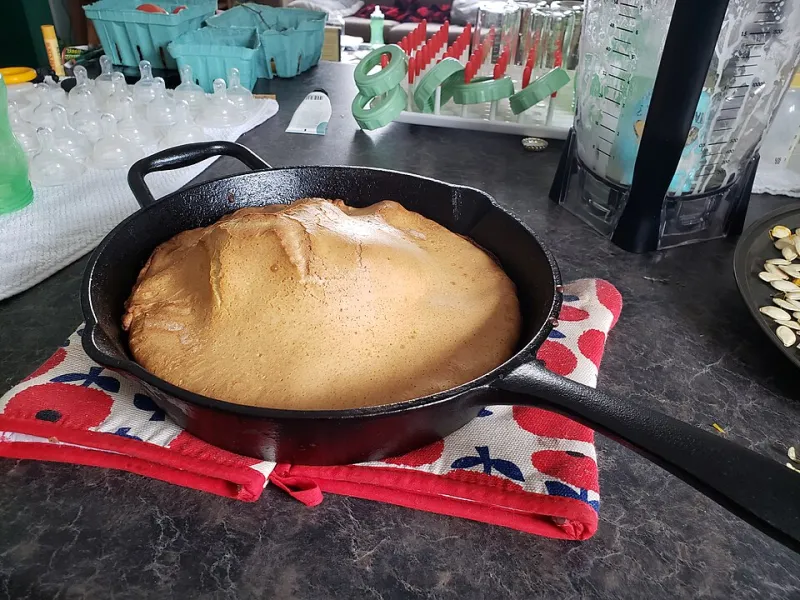
Photo: Taylorderek, CC BY-SA 4.0, via Wikimedia Commons
You wash your hands before cooking. You buy organic produce. You read nutrition labels like it's your part-time job. But there's a contaminant flying under the radar in millions of American kitchens right now — one that no amount of label-reading will help you avoid. It's microplastics, and it's coming from your cookware.
This isn't fearmongering. The science is catching up fast, and what researchers are finding is sobering enough to make you take a long, hard look at what you're actually cooking with — not just what you're cooking.
The Invisible Ingredient You Never Asked For
Microplastics are exactly what they sound like: tiny fragments of plastic, often smaller than a grain of rice and sometimes invisible to the naked eye. They've been found in oceans, soil, drinking water, and — uncomfortably — in human blood, lung tissue, and breast milk. But the kitchen? That's a contamination zone we're only beginning to fully understand.
A landmark 2022 study out of Newcastle University estimated that the average American could be ingesting up to five grams of microplastics per week — roughly the weight of a credit card. A significant chunk of that exposure happens right at home, during the act of cooking itself.
The culprits aren't mysterious. They're sitting in your cabinets right now.
Non-Stick Pans: Convenient, But at What Cost?
Polytetrafluoroethylene — better known by the brand name Teflon — has been the go-to non-stick coating for decades. It makes cooking eggs effortless and cleanup a breeze. But that slick surface is far more fragile than it looks.
Research published in Science of the Total Environment in 2022 found that a single scratched non-stick pan can release hundreds of thousands of microplastic and nanoplastic particles into food. And scratching is basically inevitable — metal utensils, abrasive sponges, even stacking pans on top of each other all degrade the coating over time.
Once that coating starts flaking, there's no putting the genie back in the bottle. Those particles are going straight into your stir-fry.
Beyond the physical fragments, older non-stick pans (pre-2013) may still contain PFOA (perfluorooctanoic acid), a chemical linked to thyroid disease, kidney cancer, and developmental issues in children. While PFOA has largely been phased out in the US, its replacements — GenX chemicals and other PFAS compounds — are drawing increasing scrutiny from environmental health scientists.
Plastic Cutting Boards: A Microplastic Factory on Your Countertop
Plastic cutting boards are in practically every American kitchen. They're cheap, lightweight, and dishwasher-safe. They're also shedding plastic into your food every single time a knife blade crosses their surface.
A 2023 study from the University of North Dakota quantified just how much: researchers estimated that a single plastic cutting board can shed more than 50 million microplastic particles per year during normal use. The harder you cut, the more particles are released. And because many of these fragments are microscopic, they mix invisibly into whatever you're chopping.
Polyethylene and polypropylene — the plastics most commonly used in cutting boards — aren't biologically inert. Some studies suggest they can carry endocrine-disrupting chemicals and act as vehicles for other contaminants, including pesticide residues and heavy metals that cling to plastic surfaces.
Other Sneaky Kitchen Offenders
Non-stick pans and plastic cutting boards get most of the attention, but they're not the only problem areas:
- Plastic spatulas and cooking utensils: When exposed to high heat, these can degrade rapidly, releasing particles directly into hot food.
- Plastic food storage containers: Reheating food in plastic containers — especially in a microwave — dramatically accelerates microplastic and chemical leaching.
- Melamine dishes and bowls: A study in JAMA Network Open found that eating hot foods from melamine tableware significantly raised urinary levels of melamine metabolites, a compound linked to kidney damage.
- Plastic wrap and zip-lock bags: Direct contact with fatty or acidic foods can cause chemical migration, particularly when heat is involved.
What the Health Risks Actually Look Like
The honest answer is that researchers are still piecing together the full picture. Human studies on microplastic health effects are relatively new territory. But early findings are raising serious flags.
Microplastics have been detected in human placentas, arterial plaque, and — in a 2024 study published in The New England Journal of Medicine — people with microplastics in their carotid arteries had a significantly higher risk of heart attack, stroke, and death compared to those without.
Beyond the physical particles themselves, plastics often carry a cocktail of chemical additives — plasticizers, flame retardants, UV stabilizers — many of which are known or suspected endocrine disruptors. For children, whose hormonal systems are still developing, the potential impact is especially concerning.
This isn't a distant, theoretical risk. It's happening at the dinner table, every night.
Rebuilding a Truly Clean Kitchen
The good news? Swapping out the worst offenders is genuinely achievable, and many of the alternatives are better in every way — more durable, more effective, and far more beautiful.
Cast Iron and Carbon Steel Cookware
These have been around for centuries for a reason. Cast iron retains heat brilliantly, goes from stovetop to oven without complaint, and with proper seasoning develops a natural non-stick surface that gets better with age. Carbon steel offers similar benefits with a lighter weight. Neither will shed particles into your food. Brands like Lodge (made in the US) make cast iron accessible at every price point.
Stainless Steel
For sautéing, searing, and sauces, high-quality stainless steel is a workhorse that won't leach anything into your food. Look for 18/10 stainless (that's 18% chromium, 10% nickel) for the best performance and durability.
Wooden and Bamboo Cutting Boards
End-grain hardwood boards — walnut, maple, cherry — are gentle on knife edges and naturally antimicrobial. Bamboo boards are a sustainable, fast-renewing option. Either way, you're cutting out the microplastic problem entirely. Treat them with food-safe mineral oil or beeswax to extend their life.
Glass and Stainless Steel Storage
Ditch the plastic containers. Glass is non-reactive, microwave-safe, and will last decades. Mason jars, Pyrex, and stainless steel containers are all excellent options that eliminate the leaching risk entirely.
Silicone Utensils (With Caveats)
Food-grade silicone is a better choice than hard plastic for spatulas and cooking tools — it's heat-resistant and more stable. Look for 100% food-grade silicone from reputable brands, and avoid cheap versions that may be cut with fillers.
Start Small, Think Long-Term
You don't have to overhaul your entire kitchen this weekend. Start with what you use most. If you cook eggs every morning on a scratched non-stick pan, that's your first swap. If your plastic cutting board is visibly grooved and worn, replace it with a wooden one this week.
Every piece you replace is one less source of contamination. Over time, you build a kitchen that actually reflects what you believe — that clean eating starts long before the food hits your plate.
At Pura Earth, we believe your kitchen should be a place of genuine nourishment, not a source of hidden harm. The microplastics crisis is real, but it's also one of the more actionable environmental health challenges we face. You have more control here than you might think — and the choices you make in your kitchen matter, for your family and for the planet.