The Air Purifier Illusion: What That Humming Machine in Your Corner Isn't Telling You
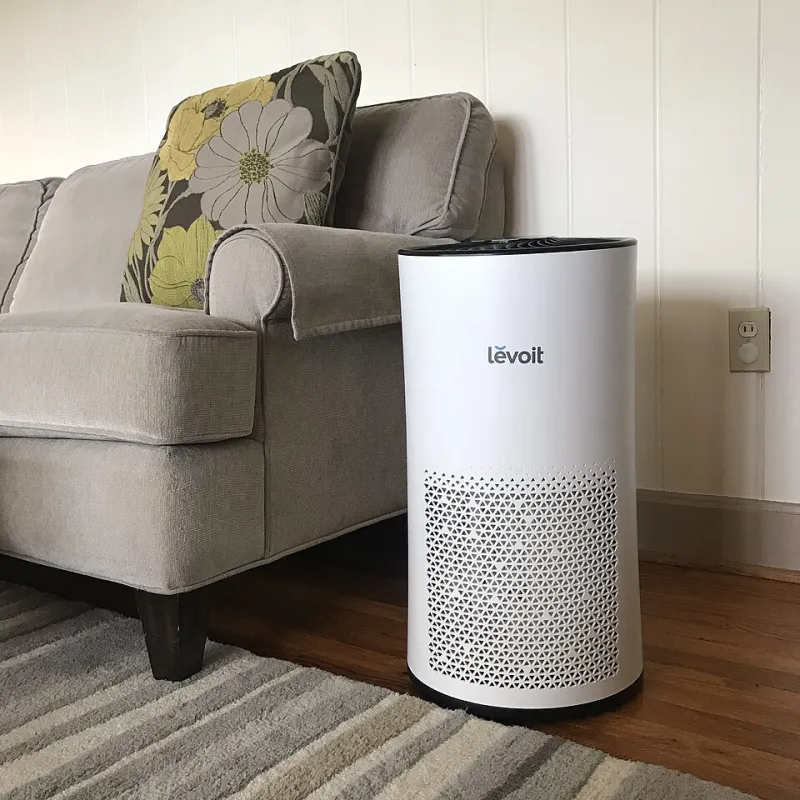
Photo: Home Air Quality Guides, CC BY-SA 2.0, via Wikimedia Commons
There's something deeply reassuring about the sound of an air purifier running in the background. It feels like action. Like protection. Like you've done something smart for your health and your family's lungs. Retailers bank on that feeling — and they've built a multi-billion-dollar industry around it.
But here's the uncomfortable question nobody's asking in the aisle at Target: is that machine actually doing anything useful?
The answer, frustratingly, is: it depends — and often, not in the ways you've been told.
The HEPA Promise — And Where It Falls Short
HEPA (High Efficiency Particulate Air) filters have become the gold standard selling point for air purifiers. The label sounds authoritative. The EPA even references HEPA filtration in its guidance on indoor air quality. But there's a gap between what "HEPA-type" or "HEPA-style" means on a box at a big-box store versus what a true, certified HEPA filter actually does.
A genuine HEPA filter is required to capture 99.97% of particles at 0.3 microns in size. That's legitimately impressive. The problem? A huge chunk of the purifiers sold to American consumers use filters that approximate this standard without meeting it. Terms like "HEPA-like" or "HEPA-style" are marketing language, not certifications. These filters may capture a fraction of what a true HEPA unit would, leaving fine particulate matter — the stuff most associated with respiratory and cardiovascular harm — circulating freely in your air.
And even among genuine HEPA units, there's a critical variable manufacturers conveniently underplay: room size and air exchange rate. A purifier rated for 150 square feet running in a 400-square-foot open-plan living room isn't purifying much of anything. It's performing the idea of clean air.
The Ozone Problem Nobody Puts on the Box
Here's where things get genuinely troubling. A significant category of air purifiers — including ionizers, electrostatic precipitators, and some UV-C light models — generate ozone as a byproduct of their operation. Ozone at ground level isn't the protective layer we associate with the upper atmosphere. It's a lung irritant. The EPA classifies it as a pollutant.
Exposure to indoor ozone can trigger coughing, chest tightness, and throat irritation. For people with asthma or compromised respiratory systems, it can be genuinely dangerous. The California Air Resources Board has gone so far as to certify air cleaning devices specifically to ensure they don't exceed safe ozone emission thresholds — a program that exists precisely because so many units on the market do.
Some of the most aggressively marketed purifiers in the US — the ones with sleek designs, app connectivity, and influencer endorsements — fall into this category. You buy them to breathe better. You might end up breathing in a new problem instead.
EMF Emissions: The Quieter Concern
This one tends to get dismissed as fringe territory, but it's worth a clear-eyed look. Many modern air purifiers — particularly smart models with Wi-Fi connectivity, app control, and built-in sensors — emit electromagnetic fields (EMF) during normal operation. The research on chronic low-level EMF exposure and human health is genuinely contested, but the precautionary principle applies here: if you're placing a device in your bedroom or your child's room and running it around the clock, it's reasonable to think about what else it's emitting besides filtered air.
This doesn't mean you need to panic. It means you should factor it into your decision-making, especially when simpler, lower-tech alternatives exist.
What's Actually Polluting Your Indoor Air
Before you can fix your indoor air quality, it helps to understand what's actually in it. The EPA has noted that indoor air can be two to five times more polluted than outdoor air — sometimes significantly more. The sources are familiar and domestic:
- Volatile organic compounds (VOCs) off-gassing from furniture, paint, flooring, and cleaning products
- Particulate matter from cooking, candles, and tracked-in outdoor pollution
- Mold spores from moisture-prone areas
- Formaldehyde from pressed wood furniture and certain textiles
- Pet dander and dust mites
- Carbon monoxide and nitrogen dioxide from gas stoves
Here's the thing: a HEPA purifier is reasonably effective against particulate matter and some biological contaminants. It is largely useless against VOCs and gases unless it also contains activated carbon filtration. Most budget and mid-range purifiers don't include meaningful activated carbon layers. So if your biggest indoor air threat is off-gassing from that new laminate floor or the synthetic rug in the living room, your purifier may be doing essentially nothing to address it.
Evidence-Based Strategies That Actually Work
So what does work? The good news is that several approaches have solid evidence behind them, cost less than a premium purifier, and don't introduce new problems.
Ventilation first, always. Opening windows — even for 10 to 15 minutes daily — does more to dilute and flush indoor pollutants than most air purifiers can manage. Cross-ventilation, where you open windows on opposite sides of a space, is particularly effective. It sounds almost embarrassingly simple. It works.
Source control is your most powerful tool. If you eliminate or reduce the sources of indoor pollution, you have less to filter in the first place. That means switching to low-VOC or zero-VOC paints, choosing solid wood furniture over pressed particleboard, replacing synthetic air fresheners with beeswax candles or essential oil diffusers used sparingly, and opting for fragrance-free or plant-based cleaning products.
Houseplants — with realistic expectations. NASA's famous plant study has been significantly overhyped in wellness circles. Plants do absorb some VOCs, but you'd need an unrealistic number of them to meaningfully clean a room. That said, they support humidity regulation, contribute to psychological wellbeing, and add life to a space. Worth having — just not as your primary air quality strategy.
MERV-rated HVAC filters, upgraded. If your home has a central HVAC system, upgrading to a filter with a MERV rating between 11 and 13 can meaningfully improve whole-home air filtration without the cost of individual room purifiers. Change it on schedule.
If you do buy a purifier, buy it right. Look for true HEPA certification (not "HEPA-type"), a meaningful activated carbon layer for VOC absorption, and a Clean Air Delivery Rate (CADR) appropriate for your actual room size. Check California's CARB certification list to avoid ozone-emitting models. Choose a wired model over a Wi-Fi-connected one if EMF exposure is a concern for your household.
The Bigger Picture
The air purifier market is a mirror of a broader dynamic in the wellness industry: the tendency to sell solutions to problems that could be better addressed by changing the conditions that created them. We fill our homes with synthetic materials, seal them tight for energy efficiency, and then buy expensive machines to clean up the chemical mess.
At Pura Earth, we think the smarter path runs in the other direction — reducing the toxic load coming in rather than filtering it out after the fact. Your lungs deserve more than a machine that makes noise and glows reassuringly in the dark.
Breathe intentionally. Source carefully. And when you do invest in air quality tools, make sure you actually understand what they can — and can't — do.