The Dark Side of Your Morning Cup: Heavy Metals in Coffee and the Brewing Habits That Actually Protect You
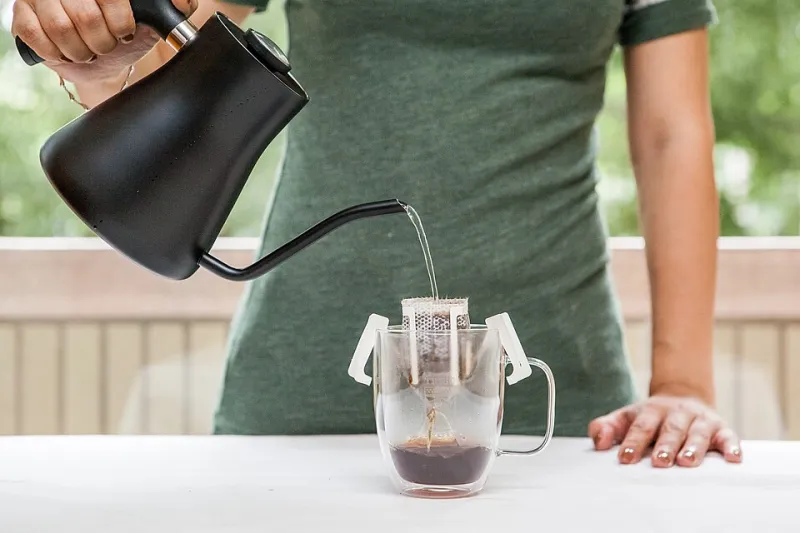
Photo: JoeSeyd, CC BY-SA 4.0, via Wikimedia Commons
For millions of Americans, coffee isn't just a drink — it's a ritual. The alarm goes off, the grinder whirs, the kitchen fills with that smell, and suddenly the day feels possible. We've built entire identities around our morning cup. Single-origin pour-overs. Cold brew concentrates. The perfect espresso pull. But here's the thing nobody at your favorite roastery is going to put on a chalkboard: that carefully sourced, lovingly brewed coffee may be carrying a payload of heavy metals straight into your bloodstream, every single morning, for decades.
That's not fearmongering. That's chemistry — and it's worth understanding before you refill.
Where the Contamination Actually Starts
Most people assume coffee contamination is a processing problem — something that happens in a dirty warehouse or from sketchy packaging. The reality is more fundamental than that. It starts in the soil.
Coffee plants are grown in tropical regions where volcanic soils, mining runoff, and industrial agriculture have elevated concentrations of heavy metals — particularly cadmium, lead, and arsenic. Cadmium is especially concerning because coffee plants are remarkably efficient at absorbing it through their root systems. Studies published in food safety journals have found cadmium levels in some commercial coffee beans that approach or exceed European food safety thresholds, which are stricter than what the U.S. currently enforces.
Lead contamination tends to enter the picture a little later in the supply chain — through processing equipment, storage containers, and even the water used during wet-processing at origin farms. Older equipment in developing-world processing facilities often contains lead-bearing alloys that leach into the beans during fermentation and washing. By the time your coffee reaches a roaster in Portland or Nashville, it's already carrying a chemical history most consumers never think to ask about.
Roasting adds another layer of complexity. While high heat does break down some organic contaminants, heavy metals aren't organic — they're elemental, meaning heat doesn't destroy them. In fact, as beans lose mass and moisture during roasting, the concentration of metals per gram of coffee can actually increase.
What the Testing Data Tells Us
In 2023, Consumer Reports released testing data on dozens of popular coffee brands, finding measurable levels of cadmium and lead in nearly every product tested — including some brands marketed as premium or organic. That last part surprised a lot of people, but it shouldn't. Organic certification addresses pesticide use and farming practices. It says nothing about heavy metal content in the soil those plants were grown in.
California's Proposition 65 has been a flashpoint here. Several major coffee brands have faced legal action over lead levels, with the state requiring warning labels on products that exceed specific thresholds. The coffee industry largely fought back, arguing that the benefits of coffee outweigh the risks — and while that argument has some scientific merit in the context of antioxidants and cognitive health, it sidesteps the real issue: consumers deserve to know what's in their cup, and the industry has little incentive to make that easy.
For most healthy adults drinking one or two cups a day, the immediate risk from any single exposure is low. The concern is accumulation. Heavy metals don't clear your system quickly. Cadmium, for instance, has a biological half-life of roughly 10 to 30 years in the kidneys. Daily low-level exposure over years and decades adds up — and the kidneys, liver, and nervous system bear the long-term cost.
Who's Most at Risk
Not everyone faces the same level of concern here, and it's worth being honest about that. But certain groups genuinely need to pay closer attention.
Pregnant women top the list. Lead crosses the placental barrier, and there is no established safe level of fetal lead exposure. Even moderate maternal exposure has been linked to developmental impacts. If you're pregnant and a daily coffee drinker, this is a conversation worth having with your OB.
Kids and teenagers who've started drinking coffee — which, let's be real, is a lot of American teens — are also in a higher-risk category because developing nervous systems are more sensitive to heavy metal disruption.
People with compromised kidney function need to be thoughtful, too. Since the kidneys are the primary route for cadmium excretion, anyone with reduced kidney capacity accumulates the metal faster and excretes it more slowly.
And then there's the equity angle that often gets left out of wellness conversations: lower-income households tend to purchase cheaper commodity coffee, which is more likely to be sourced from high-contamination regions without the quality controls that specialty roasters employ. The people with the least access to clean food systems are often the most exposed.
The Brewing Variable Nobody Talks About
Here's some genuinely good news: your brewing method matters more than most people realize, and making smarter choices at home can meaningfully reduce your heavy metal exposure without giving up coffee entirely.
Paper filters are your friend. Research has consistently shown that drip coffee brewed through paper filters removes a significant portion of dissolved metals compared to methods that allow direct water-to-grounds contact. French press, percolators, and espresso shots — where water passes through grounds under pressure without filtration — deliver more of whatever's in those beans directly into your cup. Switching from a French press to a pour-over with a paper filter is one of the simplest, lowest-cost changes you can make.
Water quality matters upstream, too. If your tap water is already carrying lead — which remains a real issue in older American cities with aging pipe infrastructure — you're compounding the problem before the coffee even touches the grounds. A quality carbon block filter on your kitchen tap, or a countertop system certified to NSF/ANSI Standard 53 for lead reduction, addresses this at the source.
Brew temperature and contact time play a role. Longer extraction at higher temperatures pulls more dissolved solids — including metals — from the grounds. Cold brew, counterintuitively, may extract somewhat lower levels of certain metals simply due to the lower temperature, though the extended steeping time creates its own variables. This is an area where the science is still evolving, but it's worth noting.
Sourcing Smarter Without Becoming a Coffee Snob
You don't need to spend $28 on a bag of micro-lot Guatemalan to drink cleaner coffee. But you do need to ask a few more questions.
Look for brands that publish third-party heavy metal testing results. This is becoming more common in the specialty coffee world, and it's a genuine differentiator. Companies like Purity Coffee and a handful of others have leaned into transparency here — not as a marketing gimmick but as a sourcing standard.
Country of origin matters. Coffee from regions with stricter agricultural oversight and lower industrial contamination — parts of Central America, Ethiopia, and some Colombian growing regions — tends to test cleaner than beans from areas with heavy mining activity or intensive pesticide use near coffee-growing land.
Certifications can help, but read them carefully. Fair Trade and Rainforest Alliance certifications address labor and environmental practices but don't guarantee low metal content. Look specifically for brands that test for heavy metals and publish the results — that's the only real verification.
Keep the Ritual, Lose the Residue
Coffee is genuinely one of the most studied foods in nutritional science, and the evidence for its benefits — from cognitive support to reduced risk of certain chronic diseases — is real and substantial. The goal here isn't to scare you away from your morning cup. It's to help you drink it smarter.
Switch to a paper-filtered method. Check your water. Ask your roaster where the beans come from and whether they test for contaminants. These aren't dramatic lifestyle overhauls — they're small, informed choices that compound over time, just like the exposures we're trying to reduce.
Live clean. Even in the small rituals. Especially in the small rituals.