The Label Says Organic. Your Produce Tells a Different Story.
Organic produce now accounts for more than $20 billion in annual US sales. For millions of American shoppers, the USDA Organic seal is a shorthand for something essential: food grown without synthetic pesticides, free from the chemical residues that have become a persistent concern in conventional agriculture. It's a reasonable assumption. It's also not entirely accurate.
This isn't an argument against organic farming, which at its best represents a genuinely better approach to agriculture — better for soil health, better for farm workers, better for surrounding ecosystems. But the certification system that's supposed to guarantee those practices has structural weaknesses that deserve honest examination, especially given what consumers are paying for it.
Organic Doesn't Mean Pesticide-Free
Let's start with the most fundamental misconception. USDA Organic certification prohibits synthetic pesticides — but it explicitly permits a list of approved substances, including certain pesticides derived from natural sources. The National Organic Program (NOP) maintains what's called the National List of Allowed and Prohibited Substances, and it includes dozens of compounds that can be applied to organic crops under specified conditions.
Some of these are genuinely low-risk. Others are more complicated. Copper sulfate, for example, is approved for use in organic farming as a fungicide and has been used in agriculture for over a century. It's also acutely toxic to aquatic organisms and accumulates in soil over time — a fact that has led the European Union to impose stricter limits on its use than the US currently maintains.
Rotenone, a botanical insecticide, was on the approved list for years despite research linking it to neurological damage in animal studies, including patterns associated with Parkinson's disease. It was eventually voluntarily removed from widespread use, but its presence on the approved list for as long as it was illustrates the gap between "natural" and "safe."
Spinosad, pyrethrin, and kaolin clay are other approved substances that appear regularly on organic produce — not because they're harmful at typical exposure levels, but because their presence challenges the assumption that organic automatically means pesticide-residue-free.
The Drift Problem: Your Neighbor's Farm Is Your Problem Too
Even farms that follow organic protocols perfectly face a challenge they can't entirely control: their neighbors. Pesticide drift — the movement of chemical particles from conventional fields to adjacent organic ones via wind, irrigation runoff, or equipment — is a documented and ongoing problem in American agriculture.
The USDA's organic regulations place the burden on the organic farmer to protect their crops from contamination, but they don't require testing of every harvest for pesticide residues as a condition of maintaining certification. A farm can remain certified organic even if its produce carries trace pesticide residues from drift, as long as the farmer can demonstrate they didn't intentionally apply prohibited substances.
A 2021 report from the Organic Center found that approximately 40% of organic produce samples tested by the USDA's Pesticide Data Program contained at least trace levels of synthetic pesticide residues. In most cases, the levels were well below the EPA's tolerance thresholds — but they were there, on food that consumers reasonably assumed was residue-free.
Certification Gaps and the Paper Trail Problem
The organic certification process is rigorous in principle. Certifying agents — third-party organizations accredited by the USDA — conduct annual inspections of farms, review records, and verify that required transition periods (typically three years for previously conventional land) have been completed. It's a meaningful system.
But it has gaps. Inspections are typically announced in advance, giving farms time to prepare. Testing of soil, water, and produce for prohibited substance residues is required only when there's specific suspicion of a violation — not as a routine verification step. The USDA's National Organic Program has faced repeated criticism from its own Inspector General for inadequate oversight of certifying agents and inconsistent enforcement of standards.
Imported organic produce adds another layer of complexity. The US imports significant volumes of organic food from countries including Mexico, China, and Peru. These imports must meet USDA Organic standards, but the agency's capacity to verify compliance on foreign farms is limited. Between 2016 and 2017, the USDA uncovered a massive fraud case in which shipments of conventional grain were falsely certified as organic — nearly $200 million worth. The fraud went undetected for years.
The Dirty Dozen: Where the Premium Is Actually Earned
None of this means organic certification is meaningless — far from it. The Environmental Working Group's annual Dirty Dozen list, which ranks conventionally grown produce by pesticide residue load, consistently shows that certain crops carry substantially higher residue levels than others. For these crops, the organic premium is genuinely protective.
Strawberries, spinach, kale, peaches, pears, nectarines, apples, grapes, bell peppers, cherries, blueberries, and green beans have topped recent Dirty Dozen lists. These are the items where choosing organic — even with its imperfections — meaningfully reduces your pesticide exposure compared to conventional alternatives.
For produce with thick, inedible skins — avocados, pineapples, onions, sweet corn — the residue picture is considerably less alarming for conventional varieties. The EWG's companion Clean Fifteen list identifies these lower-risk options, which can inform smarter spending decisions when the organic version isn't available or affordable.
Practical Strategies That Actually Reduce Your Exposure
Wash everything — including organic produce. Running produce under cold water while gently scrubbing reduces surface pesticide residues significantly. A diluted baking soda wash (one teaspoon per two cups of water, soak for 12-15 minutes) has been shown in peer-reviewed research to be more effective than water alone at removing surface residues from apples and similar produce.
Prioritize organic for the Dirty Dozen. Use the EWG's list as a shopping guide rather than trying to buy everything organic. This is a more cost-effective approach that concentrates your spending where the evidence supports the biggest payoff.
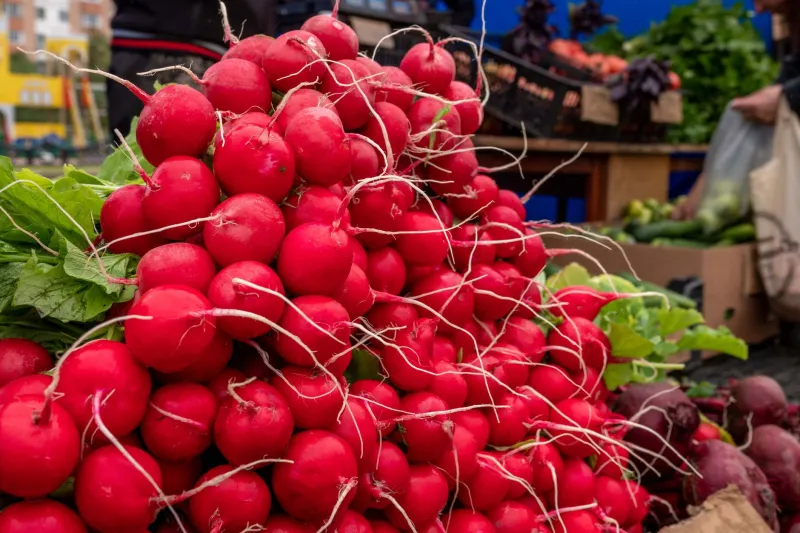
Source locally when possible. Farmers markets give you the opportunity to speak directly with growers about their practices. Many small farms use organic methods but haven't pursued certification due to cost and paperwork burden. Ask. You might find cleaner produce at lower prices than the certified organic option at your grocery store.
Peel where appropriate. For produce where peeling is practical — apples, cucumbers, potatoes — removing the skin eliminates a significant portion of surface residues, though it also removes some fiber and nutrients. It's a trade-off worth understanding.
Support policy change. The organic certification system needs stronger routine testing requirements, better oversight of imports, and more resources for the NOP's enforcement capacity. Organizations like the Organic Consumers Association and the Center for Food Safety actively advocate for these reforms — supporting them is part of the longer-term solution.
The USDA Organic seal is worth something. It's just not worth everything we've been led to believe. Going in with clear eyes — understanding what the certification actually guarantees and where its limits are — puts you in a far better position to make choices that genuinely protect your health.