Recycled Doesn't Mean Safe: The Microplastic Journey From Your Bin to Your Bloodstream
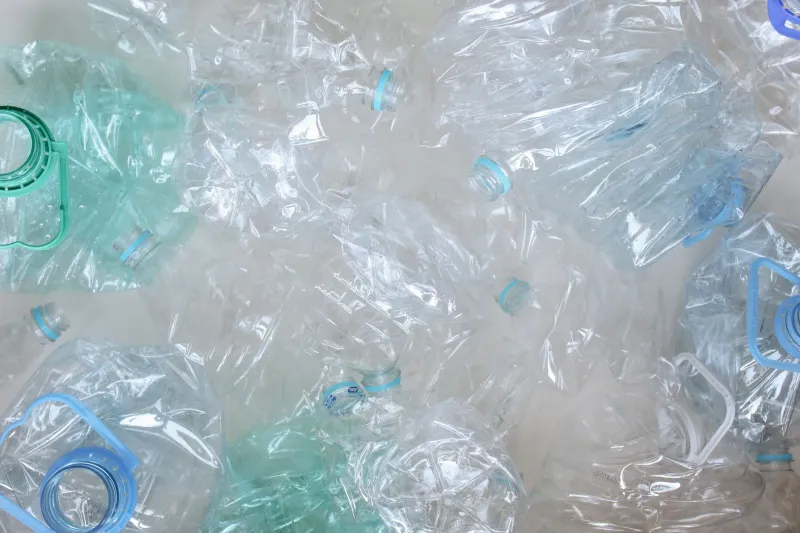
There's a particular kind of satisfaction that comes with dropping a plastic bottle into the recycling bin. You've done your part. The system takes it from there. Except — and this is the part the cheerful recycling symbol doesn't mention — the system is broken in ways that are actively putting toxins back inside your body.
This isn't an argument against recycling as a concept. It's a hard look at what actually happens to that bottle once it leaves your curb, and why the journey from "eco-friendly" container to microplastic contamination is shorter and more direct than most Americans realize.
What Actually Happens to a Recycled Plastic Bottle
Let's follow the bottle. You rinse it, cap it, toss it. A recycling truck picks it up, and it heads to a materials recovery facility — a MRF, in industry shorthand. These facilities sort, compress, and bale plastics by resin type. So far, so good.
But here's where it gets complicated. Plastics aren't infinitely recyclable. Unlike glass or aluminum, which can be melted and reformed without significant quality loss, plastic degrades every single time it's processed. The polymer chains — the long molecular structures that give plastic its strength and flexibility — break down a little more with each cycle. Heat, mechanical stress, UV exposure: all of it chips away at the material's integrity.
By the time a plastic bottle has been recycled once or twice, the resulting material is chemically different from what it started as. It's weaker, more brittle, and — critically — more likely to shed microplastics and the chemical additives that were baked into the original resin.
The Additive Problem Nobody Talks About
Virgin plastic isn't just one substance. It's a cocktail. Manufacturers add plasticizers, stabilizers, flame retardants, colorants, and UV blockers to achieve specific performance characteristics. Many of these additives — including phthalates and bisphenols — are endocrine disruptors, meaning they interfere with your body's hormone signaling at very low doses.
When plastic is recycled, those additives don't disappear. They get folded into the new material, sometimes in higher concentrations because the polymer matrix holding them in place has weakened. A 2023 study published in the journal Environmental Science & Technology found that some recycled plastics contained significantly higher levels of hazardous chemicals than their virgin counterparts, precisely because contaminants accumulate across recycling cycles.
This matters enormously when that recycled plastic ends up as food packaging — which it often does. Recycled PET (polyethylene terephthalate) is widely used in food containers, beverage bottles, and even personal care product packaging. The FDA does approve certain recycled plastics for food contact, but the testing protocols haven't kept pace with what we now know about low-dose chemical exposure.
Microplastics: The Part That Gets Inside You
Beyond chemical leaching, there's the physical problem of microplastics — particles smaller than 5 millimeters that break off from degrading plastic surfaces. Recycled plastics, with their compromised structural integrity, are particularly prone to this kind of fragmentation.
Microplastics have been found in human blood, lung tissue, placental tissue, and breast milk. A landmark 2022 study detected them in the bloodstreams of 77% of participants tested. Once inside the body, these particles don't just sit there passively. They carry adsorbed chemicals — toxins they've picked up from their environment — and can trigger inflammatory responses in tissues where they lodge.
The ingestion pathways are everywhere. Bottled water — including water bottled in recycled PET — is a major source. So is food stored in recycled plastic containers, personal care products packaged in recycled plastic, and even the dust in your home, which contains microplastic fibers shed from synthetic materials.
The "Wishcycling" Trap
Americans have been encouraged to recycle optimistically — if in doubt, toss it in the bin. The industry term for this is "wishcycling," and it's been a quiet disaster for actual recycling rates. Contaminated loads get rejected and sent to landfill. Certain plastic types (3 through 7, in most municipal systems) rarely get recycled at all — they're collected, sorted, and then buried or incinerated because there's no viable market for the material.
Meanwhile, the plastics industry spent decades funding public recycling campaigns not because recycling solved the plastic pollution problem, but because it made consumers feel good about buying more plastic. A 2020 investigation by NPR and PBS Frontline documented internal industry documents showing that executives knew as early as the 1970s that plastic recycling was economically unworkable at scale — and promoted it anyway.
What You Can Actually Do
None of this means you should stop recycling what genuinely gets recycled in your area. But it does mean the solution has to start earlier — before the plastic enters your home.
Reduce first, then rethink. The most effective thing you can do is opt out of single-use plastic where alternatives exist. Stainless steel or glass water bottles, beeswax food wraps, glass food storage containers — these aren't just aesthetic choices, they're functional ones that break the microplastic cycle at the source.
Know your plastics. If you're buying products in plastic, PET (resin code 1) and HDPE (resin code 2) are the most commonly and successfully recycled in the US. Plastics labeled 3 through 7 are largely recycling theater in most municipalities — check your local MRF's accepted materials list.
Filter your water. A quality reverse osmosis or activated carbon block filter significantly reduces microplastic load in your drinking water. This is especially important if you've been relying on bottled water as a "clean" alternative.
Rethink your personal care routine. Shampoo, lotion, and cleaning product bottles are frequently made from recycled plastic. Consider brands that use glass packaging, or explore concentrated refill formats that reduce packaging volume altogether.
Freeze and heat in glass. Microplastic shedding accelerates with temperature stress. Never microwave food in plastic containers — recycled or otherwise — and avoid freezing food in plastic bags for extended periods.
The recycling bin isn't the finish line. It's a transfer point in a system that needs a complete overhaul — and until that overhaul happens, the most protective thing you can do is minimize how much plastic enters your life in the first place. That's not pessimism. That's just working with the reality we actually have.