Scratch the Surface: What That Flaking Non-Stick Pan Is Really Putting on Your Plate
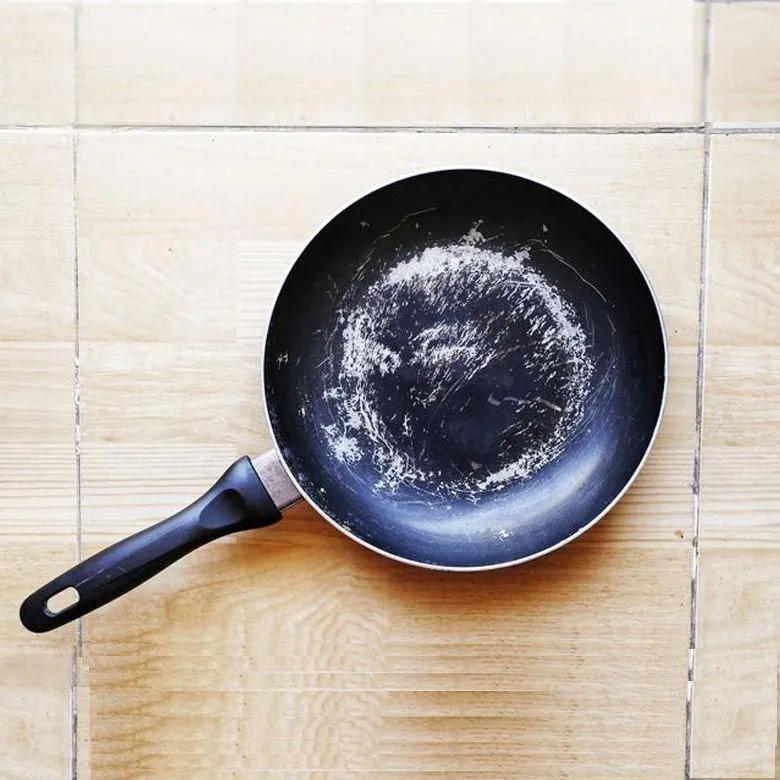
Photo: old scratched non-stick frying pan close up kitchen, via cdn.recyclopedia.sg
There's something deeply ironic about the way we think about non-stick cookware. We buy it because it feels clean — nothing sticks, cleanup is a breeze, and you can cook with less oil. It looks hygienic. It feels modern. But underneath that silky, frictionless surface is a chemical story that the cookware industry has worked very hard to keep you from thinking too hard about.
We're talking about PFAS — per- and polyfluoroalkyl substances — a sprawling family of thousands of synthetic chemicals that includes the now-infamous PFOA (perfluorooctanoic acid). These are the compounds responsible for that legendary non-stick performance. They're also the reason the Environmental Working Group, the EPA, and a growing chorus of independent researchers are waving serious red flags about what ends up in your scrambled eggs.
What Makes Non-Stick "Non-Stick" — And Why That's the Problem
The magic of a non-stick pan comes down to polytetrafluoroethylene, better known by DuPont's trade name Teflon. PTFE itself is considered relatively stable at normal cooking temperatures. The problem is that it doesn't exist in isolation. The manufacturing process historically relied on PFOA as a processing aid, and even modern "PFOA-free" formulations have swapped in chemical cousins — GenX, PFBS, and other next-generation PFAS — that researchers are increasingly finding to be just as problematic.
Here's what happens when you turn up the heat: at temperatures above 500°F — which a preheating pan on a gas burner can hit in under five minutes — PTFE coatings begin to break down and off-gas toxic fumes. At 570°F, the degradation accelerates. This isn't a fringe concern or a worst-case scenario. It's documented chemistry. The fumes are potent enough to kill pet birds outright (their respiratory systems are far more sensitive than ours), a phenomenon so well established it has a name: Teflon toxicosis.
For humans, the effects are subtler but no less real. Short-term exposure to these fumes has been linked to polymer fume fever — flu-like symptoms that often get dismissed as a random illness. Long-term, low-level PFAS exposure is where the science gets genuinely alarming.
The Forever Chemical Body Burden
PFAS earned their nickname because they don't break down — not in the environment, and not in your body. Once these compounds get in, they accumulate in your blood, liver, kidneys, and thyroid. The CDC's National Health and Nutrition Examination Survey found detectable PFAS in the blood of nearly every American tested. That's not a coincidence. It's the compounded result of decades of exposure through cookware, food packaging, stain-resistant fabrics, and contaminated water supplies.
The documented health associations are sobering. Elevated PFAS levels have been linked to thyroid disease, immune system suppression (including reduced vaccine response — relevant for everyone right now), elevated cholesterol, kidney and testicular cancers, hormonal disruption, and complications during pregnancy including preeclampsia and low birth weight. Children and pregnant people carry a disproportionate burden of risk.
The EPA has spent years tightening its guidance on PFAS in drinking water, but cookware? That's largely still a buyer-beware situation.
The "Safe" Label That Isn't Doing What You Think
After years of public pressure, DuPont (now Chemours) and other manufacturers phased out PFOA from their manufacturing processes. Cue the marketing blitz: "PFOA-free!" became the new selling point plastered across cookware packaging at every price point. It sounds like a win. It mostly isn't.
"PFOA-free" means one specific chemical was removed. It says nothing about the dozens of other PFAS compounds that replaced it — compounds with far less safety data, shorter regulatory histories, and emerging evidence of similar toxicity profiles. This is a classic chemical industry playbook: pull the named villain, slide in a replacement, and market the absence of the old problem as proof of safety.
Some brands have gone further, claiming their coatings are made with "100% non-toxic" or "eco-friendly" materials. Unless those claims are backed by third-party certification and transparent ingredient disclosure, they're largely meaningless. The word "ceramic" on a pan, for instance, doesn't guarantee a PFAS-free product — it often just describes the appearance of the coating, which may still contain fluoropolymer components.
What Actually Works — And Won't Poison You
The good news is that you don't have to choose between convenience and clean cooking. You just have to recalibrate your expectations a little — and invest in cookware that's been doing the job safely for generations.
Cast iron is the gold standard for a reason. Properly seasoned cast iron develops a natural non-stick surface through polymerized oil layers. It's virtually indestructible, improves with age, and adds a small but meaningful amount of dietary iron to your food — a legitimate health benefit. Lodge is an American-made brand that won't break the bank, and vintage cast iron from thrift stores and estate sales is often even better quality than new.
Carbon steel offers a lighter-weight alternative with similar seasoning properties. It's the pan of choice in professional kitchens across France and increasingly popular among home cooks who want cast iron performance without the heft. It does require some care, but nothing unreasonable.
Stainless steel is the workhorse of clean cooking. It doesn't require seasoning, handles high heat beautifully, is dishwasher safe, and contains no coatings to degrade. The learning curve involves understanding heat management — stainless rewards patience and proper preheating — but once you've got it, you'll wonder why you ever needed non-stick.
Enameled cast iron (think Le Creuset or the more budget-friendly Lodge enameled line) gives you the thermal mass of cast iron without the seasoning maintenance. The glass-like enamel coating is inert and doesn't interact with food. It's excellent for braises, soups, and anything acidic that would strip a seasoned surface.
Truly ceramic cookware — not ceramic-coated, but solid ceramic or high-quality ceramic-coated pans from brands that provide third-party testing documentation — can be a legitimate non-stick option, particularly for lower-heat cooking like eggs. Just do your homework before buying and look for companies that publish their safety certifications.
The Upgrade Your Kitchen Actually Needs
Switching cookware isn't glamorous. It's not a supplement stack or a fancy detox protocol. But in terms of reducing your daily chemical exposure, retiring your scratched-up non-stick pan is one of the highest-impact swaps you can make — especially if you cook at home regularly, which is already one of the healthiest things you can do for yourself.
The frictionless surface was always a trade-off, even if nobody told you what you were trading. Now you know. And the alternatives aren't just safer — many home cooks who make the switch find they actually prefer cooking on cast iron or stainless steel once they learn the technique. Better sears, better flavor development, better results.
Clean cooking starts with what you cook in. It's time to take your pan as seriously as you take your ingredients.